Founder & Product Lead ยท Independent

MY GENERATION DOCUMENTS EVERYTHING. THEIRS IS DISAPPEARING.

I'm building an AI interviewer and ghostwriter that sits down with seniors, asks the right questions, and turns a lifetime of memory into a finished, readable memoir, before it's too late to ask.

The Origin

My grandmother typed out her life story. Most people never will.

A few years ago, my grandmother gave me a memoir she had written herself, decades of her life, in her own words, typed out in a notebook titled The Memories of a Turtle over months of quiet effort. I read the whole thing in one sitting. It told me things about her childhood, her choices, and the people she'd loved and lost that I had simply never known to ask about. It is one of the most valuable things I own.

It also made me uncomfortable. My generation narrates almost every hour of our lives, we post, we story, we archive by default. Meanwhile the generation with the most irreplaceable stories to tell, the ones who lived through the events I only read about in textbooks, mostly leaves nothing behind but photographs and a name on a headstone. The gap isn't a lack of memory. It's a lack of a comfortable way to get the memory out.

Writing a memoir the way my grandmother did takes discipline, time, and a level of comfort with writing that a lot of people, especially people in their 70s, 80s, and 90s, never had reason to build. I wanted to remove that barrier entirely. Not by asking someone to write a book. By asking someone to simply talk, the way they'd talk to a grandchild who finally showed up with good questions.
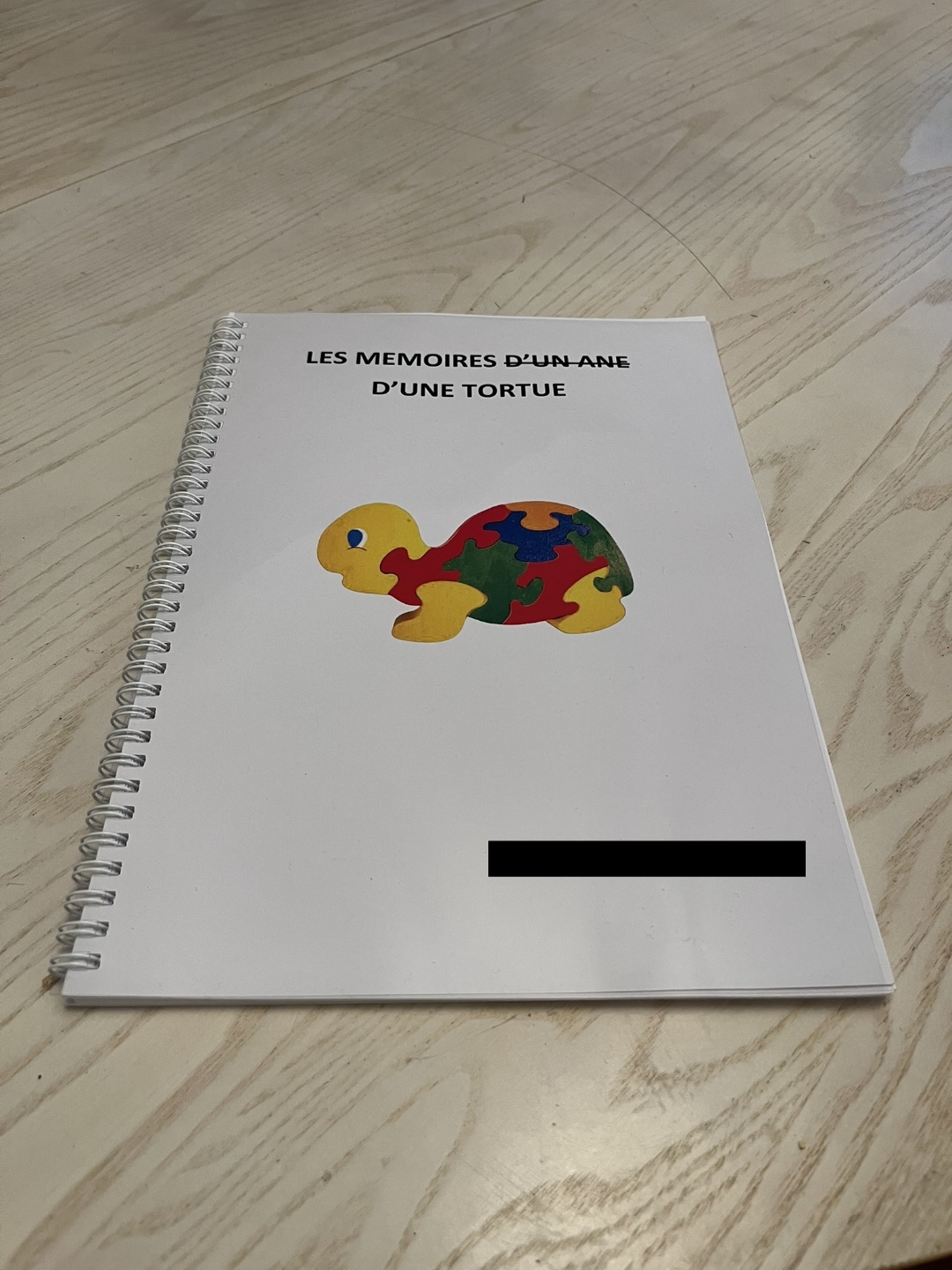
The Memories of a Turtle, a typed memoir notebook with a turtle puzzle-piece design on the cover
The Memories of a Turtle, the memoir that started this project

The Product

An interviewer that never runs out of good questions, and a ghostwriter that never gets tired.

The system works like a patient, well-read interviewer paired with a professional ghostwriter, available on a phone call or a simple voice app, on the storyteller's schedule, at whatever pace feels comfortable.

01

Conversational Interviews

The AI conducts warm, structured voice conversations across many short sessions: childhood, family, career, hardship, love, belief, following up the way a good journalist or grandchild would, instead of handing over a static list of prompts.

02

Transcription & Structure

Every session is transcribed, timestamped, and organized into a timeline of people, places, and events, so nothing said across months of conversation gets lost or contradicted later.

03

Ghostwritten Chapters

The structured material is ghostwritten into real prose, chapter by chapter, in the storyteller's own voice, then reviewed and corrected by them until it reads exactly the way they'd want it to.

Why This, Why Now

The technology to do this well didn't exist five years ago. Now it does.

Voice models are finally good enough to hold a genuinely warm, patient conversation instead of a scripted survey. Language models are finally good enough to turn a messy transcript into prose that sounds like a real person, not a chatbot summary. The gap left is product and execution: building an experience gentle enough for someone who has never used an app like this, and rigorous enough that the resulting book is something a family actually treasures. That's the problem I'm solving.

Abstract waveform visualization around a microphone icon, representing a recorded voice interview
Every session becomes structured, searchable material
An old leather photo album open on a wooden table, filled with faded family photographs
Photographs survive. The stories behind them usually don't.

What's At Stake

A photo album tells you who was in the room. It doesn't tell you why it mattered.

Every family has a box of photographs and almost no family has the story that explains them: who that person really was, what they were afraid of, what they were proud of, what they'd tell you if you asked the right question at the right time. That story is only available for a limited window, and it disappears permanently the moment it isn't captured.

I think of this less as a writing tool and more as an act of preservation, the same instinct that makes archivists digitize film before it degrades, applied to the people who are still here to tell you what happened in their own words.

Early Access

Know someone whose story shouldn't disappear?

I'm onboarding a small group of families for the first beta, either as the storyteller or on behalf of a parent or grandparent. Leave an email and I'll personally reach out when a seat opens up.